

How to choose a visitor management system in the UAE
- Topic
- Visitor management
- Reading time
- 8 min
- Sources
- 7 checked
Short answer
Check eight things: how visitors check in (kiosk, reception tablet or app), Emirates ID reading, Arabic and English screens, host alerts by WhatsApp, SMS or email, badge printing, links to your gates and doors, where visitor data is kept under UAE rules, and who supports the system locally. Then ask for a live demo.
The eight questions to ask every supplier
A visitor management system replaces the paper visitor book. It records who came, whom they visited and when they left, and it tells the host they have arrived.
LogIT makes its own system, LogIT VisitLog, so we are not neutral. This checklist is written to work for any system, ours included.
| Question | Why it matters | A good answer |
|---|---|---|
| How do visitors check in? | A staffed reception, an empty lobby and a security gate need different setups. | A choice of kiosk, reception tablet, mobile app and web, all sharing one visitor list. |
| Can it read the Emirates ID? | Typing names is slow and full of mistakes. Abu Dhabi schools must take a valid Emirates ID in exchange for a visitor pass. | Reads the card chip with a PC/SC smart-card reader, and scans passports for visitors without an Emirates ID. |
| Is it in Arabic and English? | Many visitors, drivers and contractors prefer Arabic. | Full Arabic screens that read right to left, not just translated buttons. |
| How is the host told? | Hosts are rarely waiting at their desk. | A WhatsApp, SMS or email alert with the visitor name and photo. |
| Can it print badges? | Staff and guards should see at a glance who is a visitor. | A badge or label with photo, host and date, from a card or label printer. |
| Does it work with doors and gates? | Visitors should reach only the floors and doors they need. | A QR code, card or face pass that works on your turnstiles and readers for the visit only. |
| Where is the data kept, and for how long? | UAE data protection rules apply to visitor names, ID numbers and photos. | You set the retention period and who can see records, and you know where the data is hosted. |
| Who supports it here? | Kiosks, scanners and printers need someone on site when they stop. | A UAE team that installs and services both the software and the hardware. |
Kiosk, tablet, app or paper book?
Most sites mix two or three of these. The web portal is the back office behind all of them: it is where admins pre-register visitors and run reports.
| Option | How it works | Good for | Watch out for |
|---|---|---|---|
| Self-service kiosk | The visitor scans an ID, has a photo taken, picks the host and gets a badge. | Busy lobbies, unstaffed receptions, schools and factories | Needs floor space, power and network. The ID reader and printer add cost. |
| Reception tablet | The receptionist or the visitor checks in on a tablet at the desk. | Small offices with a receptionist | Slower when a queue builds. Needs a secure stand and charging. |
| Mobile app for hosts and guards | Hosts invite visitors with a QR code; guards check and approve them at the gate. | Gated sites, compounds and offices with security staff | Visitors must have the invite on their phone. |
| Web portal | Admins pre-register visitors, manage lists and see reports. | Every setup, as the back office | Not a check-in point on its own. |
| Paper visitor book | Visitors write their own details. | Only the smallest offices | No ID check, hard to read, open for every visitor to see, and slow to search in an emergency. |
Emirates ID and passport scanning
There are two ways to take a visitor's details from an Emirates ID. Reading the chip takes the data stored on the card itself, so names and numbers come out right. Scanning the printed card takes a picture and reads the text from it, which works for more card types but can misread.
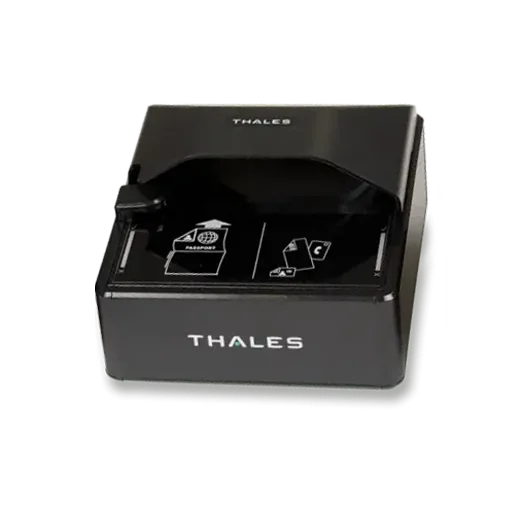
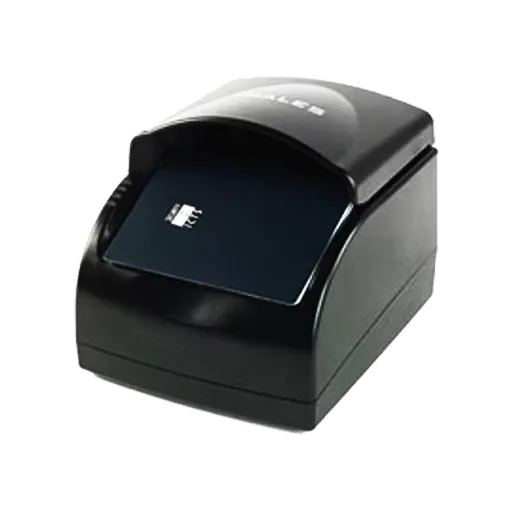
The UAE's ICP (Federal Authority for Identity, Citizenship, Customs and Port Security) publishes a toolkit for reading the Emirates ID, and says it works with any PC/SC compatible smart-card reader. PC/SC is the common standard for smart-card readers on computers. The Ministry of Education's ID card reader manual names the HID OMNIKEY reader. LogIT supplies HID OMNIKEY readers and Thales passport and ID scanners.
Only keep what you need. Many sites need the name, the ID number and the expiry date, not a full image of the card. More detail: Emirates ID scanning for visitor check-in.
Schools in Abu Dhabi
ADEK's rules for Abu Dhabi schools say visitors must sign in at the school's security gate and hand over a valid Emirates ID in exchange for a visitor pass, which they wear on site and return when they leave. Schools had to comply fully by 1 February 2026. A system that reads the Emirates ID and prints a pass at the gate turns this into a quick, recorded step.
Data rules: PDPL, DIFC and ADGM
Visitor names, ID numbers and photos are personal data. Which law applies depends on where your company is set up:
- Mainland UAE and most free zones: Federal Decree-Law 45 of 2021 on personal data protection (the PDPL). It took effect on 2 January 2022, generally needs clear opt-in consent, and covers biometric data.
- DIFC: the DIFC Data Protection Law, DIFC Law No. 5 of 2020.
- ADGM: the ADGM Data Protection Regulations 2021. ADGM entities that process personal data must register as data controllers.
- Legal commentators note that the PDPL executive regulations were still awaited in 2026, so expect the federal rules to become more detailed.
What a good system lets you do with data
Whatever the law, look for these controls. This is general information, not legal advice.
- Show a short privacy notice before the visitor checks in.
- Collect only the fields you need.
- Delete records automatically after a set period.
- Limit who can see and export visitor data.
- Find and delete one person's records if they ask.
- Choose cloud hosting or your own server, and know which country the data sits in.
Integrations that save time
- Doors and gates: a visitor QR code or face pass that works on your speed gates and readers, then expires.
- Badge printing: a card or label printer at reception. See ID card printers and PVC cards.
- Staff directory: so visitors can find their host by name, and the right person gets the alert.
- Evacuation list: a live list of who is on site, for fire drills and emergencies.
What drives the cost
We do not publish prices, because each setup is different. These are the parts of a quote. Ask every supplier for a written quote that lists each one, so you can compare like with like.
| Part | What changes the price |
|---|---|
| Software | Subscription or one-off licence; the number of sites, check-in points and users. |
| Check-in hardware | Floor-standing kiosk, desk kiosk, or a tablet with a stand. |
| ID readers | An Emirates ID chip reader, a passport scanner, or both. |
| Badge printing | A card or label printer, plus cards, labels and ribbons. |
| Gates and doors | Linking to existing turnstiles and readers, or adding new ones. |
| Installation and support | Network and power at each point, mounting, training and ongoing support. |
Where LogIT VisitLog fits
LogIT VisitLog is our own visitor management system. It has three apps on one system: a web app for reception, security and managers; a mobile app for staff, which runs on Android phones and is built and coming to Google Play; and a kiosk app for visitors at a lobby tablet. Here is how it answers the checklist:
- Check-in: at the reception desk in the web app, or at the lobby kiosk. Walk-in check-ins at the kiosk keep working if the internet drops.
- Emirates ID: the kiosk scans the Emirates ID and the form fills itself in. At the desk, an ID card reader, a passport scanner or webcam ID and passport scanning are optional add-ons. See Emirates ID scanning.
- Arabic and English: in all three apps, right to left where needed.
- Host alerts: automatic emails for invitations, approvals and arrivals, and hosts see their own visitors for the day on their phone.
- Badges: numbered badges are handed out and taken back, and you can see every badge that was not returned.
- Doors and gates: a link to a door access system is an optional add-on.
- Data: ID and passport numbers stay hidden until someone needs to see them, and every change is recorded with a one-click check that nothing was altered.
- Emergencies: security can start an evacuation or a drill from a phone and see how many visitors are still on site.
One supplier for the whole setup
Because we also supply passport and ID scanners, ID card printers, HuAi speed gates and biometric readers, one team can supply, set up and support the whole entrance. Use the checklist above on us too: book a demo and we'll walk you through a visitor's day.
Products in this guide
Add what you need to one quote list, then send it by WhatsApp or email. We reply with prices and stock.
Sources we checked
Product facts come from the makers' own pages. Rules come from official or legal sources.
- 1ICP Emirates ID toolkit (opens in a new tab)icp.gov.ae
- 2Ministry of Education ID card reader manual (PDF) (opens in a new tab)moe.gov.ae
- 3Abu Dhabi schools ordered to tighten visitor access (Gulf Today) (opens in a new tab)gulftoday.ae
- 4UAE issues landmark personal data protection law (Clyde & Co) (opens in a new tab)clydeco.com
- 5UAE data protection and privacy 2026 (Chambers) (opens in a new tab)practiceguides.chambers.com
- 6DIFC Data Protection Law, DIFC Law No. 5 of 2020 (opens in a new tab)difc.com
- 7ADGM Office of Data Protection (opens in a new tab)adgm.com
Questions buyers ask
Short, plain answers. If yours is not here, ask us on WhatsApp.
What should a visitor management system do?
At minimum it should check visitors in quickly, record who they are and whom they visit, alert the host, print or show a pass, and keep a live list of who is on site. In the UAE, Emirates ID reading, Arabic screens and clear data controls are also worth asking for.
Do we need Arabic screens?
If many of your visitors, drivers or contractors read Arabic first, yes. Ask for full Arabic screens that read right to left, including the privacy notice and the badge, not only translated buttons.
Cloud or on-premises: which is better?
Both can work. Cloud is quicker to set up and update. On-premises keeps the data on your own servers, which some government and free zone sites prefer. Ask where cloud data is hosted and who can reach it.
Can visitors check in with their Emirates ID?
Yes, with a system that reads the card chip through a PC/SC smart-card reader. The UAE ICP says its Emirates ID toolkit works with any PC/SC compatible reader, and the Ministry of Education manual names the HID OMNIKEY.
How long should we keep visitor records?
Only as long as you have a clear reason to. Set an automatic deletion period in the system and state it in your privacy notice. Schools and regulated sites may have their own rules, so check with your regulator or legal adviser.
Read next
Send us your list. We reply with prices and availability.
Not sure which one fits? Send us a photo of the site, the door or the card you use now. We suggest the parts, then supply, install and support them across the UAE.
- Company
- LogIT Solutions LLC
- Office
- Dubai Silicon Oasis
- In business
- 13+ years
- Phone
- +971 50 889 5653
- Offices
- UAE · India · Kenya